How to Write a Restaurant Review: A Practical Guide with Examples
Turn a real meal into a specific, fair, and useful restaurant review by covering food, service, atmosphere, value, and the details that shaped your visit.

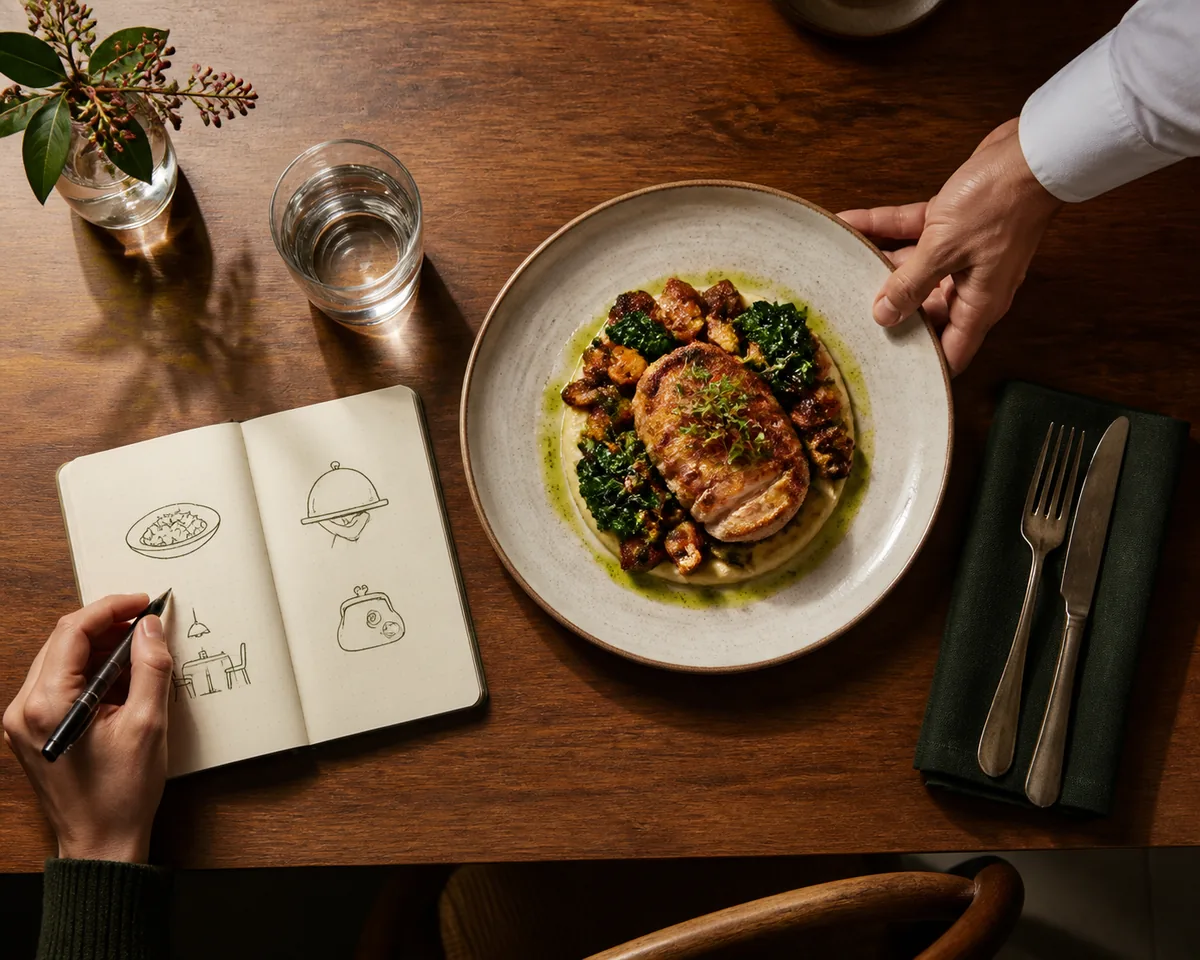
How do you write a good restaurant review?
Start with the context of your visit, then describe one or two specific observations about the food, service, atmosphere, or value. Explain how those details affected the meal and finish with a recommendation for the kind of diner who would or would not enjoy the restaurant.
A strong restaurant review does not need to sound like a professional critic. It needs to help another person decide whether the experience fits their occasion, budget, taste, and expectations. Replace broad words such as amazing or terrible with evidence a reader can picture: a dish arrived lukewarm, a server explained an allergy question carefully, or a quiet corner worked well for a conversation.
Use this simple formula
I visited [restaurant] for [occasion]. I ordered [dish or meal] and noticed [specific detail]. That mattered because [result]. I would recommend it to [type of diner], especially if [relevant condition].
Evaluate food, service, atmosphere, and value
These four areas give a restaurant review a clear structure. You do not have to score every area equally, but covering the areas that mattered to your visit makes the review more useful than a list of adjectives.
| Area | What to notice | Useful question |
|---|---|---|
| Food | Flavor, temperature, texture, freshness, presentation, portions, and whether the dish matched its description | What did I actually taste and how did the preparation affect the meal? |
| Service | Welcome, pacing, accuracy, communication, menu knowledge, and response to questions or problems | Did the team make the experience easier, clearer, or more frustrating? |
| Atmosphere | Noise, seating, lighting, cleanliness, music, layout, and suitability for the occasion | Would this setting work for a date, family meal, quick lunch, or work meeting? |
| Value | Price, portion, quality, extras, wait time, and whether the total matched expectations | Was the overall experience worth the cost for the intended diner? |
Food: describe the eating experience
Name the dish when it matters and choose sensory details that support your opinion. Mention seasoning, texture, temperature, freshness, portion size, or a preparation choice instead of simply calling the food great.
Service: describe actions and timing
Focus on what happened: how quickly you were greeted, whether the order was accurate, how questions were handled, and whether the team communicated delays or substitutions. Avoid guessing at a worker's intention.
Atmosphere: connect the room to the occasion
Explain the practical effect of the setting. A lively room may suit a celebration but make a business conversation difficult; a small table may be cozy for two and uncomfortable for a large group.
Value: judge the whole trade-off
Value is more than a low price. Consider quality, portions, service, wait time, location, and what you expected before deciding whether the experience felt worthwhile.

How to write a restaurant review step by step
Draft from notes while the visit is still fresh, then edit for clarity. The sequence below works for a short review on Google or Yelp and for a longer food review on a blog.
- 1. Identify the occasion Say whether you visited for a quick lunch, date night, family dinner, celebration, delivery, or another purpose. The occasion gives readers a fair frame for your expectations.
- 2. Name what you ordered Mention the main dish, tasting menu, drink, or delivery order you actually tried. If several people shared food, identify which observations came from your own portion.
- 3. Choose the strongest details Select two or three observations that changed the experience. A well-seasoned sauce, a long wait without an update, or a thoughtful allergy explanation is more useful than a long inventory of everything on the menu.
- 4. Explain the result Connect each detail to an effect: the dish felt balanced, the delay made the meal difficult for children, or the seating made it easy to talk. This is where a review becomes guidance rather than a diary entry.
- 5. Add a fair limitation If the experience was positive, include a trade-off when one mattered. If it was negative, acknowledge what worked or what you did not personally test. Balance does not mean inventing praise; it means staying accurate.
- 6. Give a specific recommendation Tell readers who the restaurant may suit and who may want another option. Mention a budget, dietary, noise, accessibility, timing, or occasion factor only when you observed or can clearly frame it as a personal consideration.
- 7. Edit before publishing Remove repeated adjectives, private information, insults, unsupported accusations, and details that belong to another visit. Check that the rating, headline, and conclusion match the evidence in the text.
Restaurant review examples for different situations
Use these as writing patterns, not ready-made testimonials. Replace the details with your own observations and do not reuse the same wording for multiple businesses.
Short positive review
We stopped in for a weekday lunch and shared the roasted vegetable sandwich and tomato soup. The soup arrived hot, the bread stayed crisp, and the staff explained the dairy-free options clearly. A good choice for a relaxed lunch when you value careful service over a rushed meal.
Why it works: it names the occasion, food, service detail, and audience without claiming the restaurant is perfect.
Balanced review for a date night
The grilled fish was fresh and well seasoned, and the candlelit room made it easy to talk. Our reservation started about twenty minutes late, although the host kept us updated and offered a quieter table once it opened. I would return for a special dinner, but I would book earlier than the stated time.
Why it works: the review gives a clear strength, a specific limitation, and a practical recommendation.
Constructive negative review
I ordered delivery for a family dinner and the package arrived nearly forty minutes after the quoted window. The noodles were still flavorful, but the fried items had lost their texture and customer support did not respond before we finished eating. Better packaging and a clearer delay update would have made the experience more reasonable.
Why it works: it describes the order, timing, food impact, response, and a possible improvement without attacking staff personally.
Review for a dietary question
I asked about a nut allergy before ordering and the server checked with the kitchen instead of guessing. The menu had fewer choices than I expected, but the final dish was clearly explained and arrived separately from the shared plates. This could work well for diners who need careful communication, provided they confirm current ingredients in advance.
Why it works: it reports the communication you experienced and avoids promising that every allergy risk is eliminated.
Common restaurant review mistakes to avoid
A review becomes less credible when the language is stronger than the evidence. Before publishing, check for these common problems.
- Using only vague praise or anger. Words such as incredible, awful, or overrated do not tell a reader what happened. Add a dish, action, timing detail, or result.
- Reviewing a promise you did not test. Do not claim that every menu item is fresh, every table is quiet, or the restaurant always handles allergies well after one visit.
- Confusing a preference with a defect. Spicy food, loud music, small portions, or a modern menu may not suit you without being universally poor. Explain the fit for a particular diner.
- Attacking a person instead of describing conduct. Focus on the action, its effect, and the response to the problem. Do not publish private names, threats, or speculation about motives.
- Ignoring the total experience. A review that discusses only one bite or one delay may omit the context a reader needs. Mention the most important trade-off when it changed your decision.
- Posting while angry and never revising. Write notes immediately if needed, but reread the final version after you can separate the initial emotion from the facts you can support.
If the business had a reasonable chance to fix a problem, say whether you contacted it and what happened. An update after a refund, replacement, correction, or explanation can make the review more accurate without erasing the original experience.
How to use AI when writing a restaurant review
AI can help turn rough notes into a clear restaurant review, shorten a long draft, or suggest a calmer way to describe a problem. It cannot verify that a meal happened, decide whether a dish was safe for you, or supply facts you did not observe.
Give the tool your real notes: the occasion, dishes ordered, timing, service interactions, atmosphere, price context, and the conclusion you want to communicate. Ask it to preserve uncertainty and mark missing details instead of filling gaps with confident-sounding claims.
Read the result line by line before posting. Remove invented ingredients, exact wait times you did not record, claims about other customers, and language that turns a personal preference into a universal fact. The final rating and responsibility for the review remain yours.
- Use AI to organize firsthand notes, not to create a fictional dining experience.
- Keep details that you can support and soften or remove anything uncertain.
- Check names, prices, menu availability, allergy wording, and dates before publishing.
- Do not use incentives, copied text, or automated posting to manufacture reviews.
How to write a restaurant review: FAQs
What should a restaurant review include?
Include the occasion, what you ordered, specific observations about food or service, the atmosphere when it affected the visit, the value or price context, and a recommendation for a particular type of diner.
How long should a restaurant review be?
There is no universal word count. Two or three specific sentences can be enough for a simple visit; a complex meal, delivery problem, or dietary question may need a short paragraph with context, evidence, impact, and a conclusion.
How do I write a negative restaurant review fairly?
Describe what you expected, what happened, and the practical impact. Avoid insults and claims about motives. If you contacted the restaurant or the issue was later resolved, include that update so the review reflects the full timeline.
What is a good food review example?
A useful example names the dish and a sensory detail, such as temperature, texture, seasoning, or freshness, then explains the result. For example, you could say that the soup arrived hot and balanced, while the bread became soggy during delivery.
Can AI write a restaurant review for me?
AI can organize your real notes and improve clarity, but it should not invent a meal, dish, service interaction, rating, or result. Review every sentence and keep only details you personally experienced or can clearly label as uncertain.
Final checklist before you publish
Confirm that the review says why you visited, what you ordered, what you observed, and how the details affected the experience. Make sure the conclusion identifies the type of diner or occasion the restaurant may suit. If the review is negative, keep the criticism tied to observable conduct, food, timing, setting, or value.
A helpful restaurant review is not the longest or most dramatic one. It is an honest explanation that gives the next diner enough context to make a better decision. Use the four-part framework, keep the wording personal and precise, and publish only what you can stand behind.