How to Write a Review: A Simple Formula, Examples, and Tips
Turn a real experience into a specific, fair and useful review with a repeatable structure for restaurants, products, hotels, services and software.


How Do You Write a Good Review? Start With Four Parts
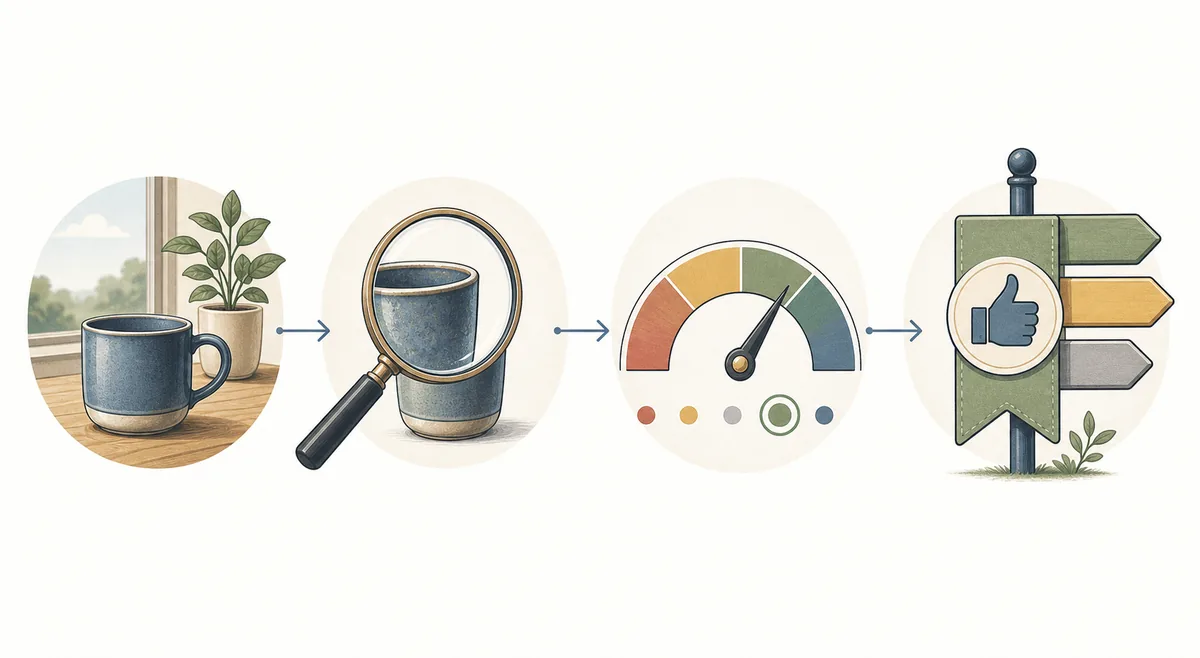
The easiest way to write a review is to connect four ideas: give the context, name a specific detail, explain the outcome, and make a qualified recommendation. This works for a restaurant, product, hotel, local service, app or subscription because it tells readers what happened and why it mattered.
A review does not need to be long to be useful. Two or three honest sentences can help more than a page of vague praise. Mention the situation another reader would recognize, include one observable detail, and avoid turning a single experience into a universal promise.
Before posting, read the draft as if you were deciding whether to buy, book or visit. Can you tell what was reviewed, when the experience happened, what stood out and who might find it useful? If not, replace general adjectives with one concrete fact.
Copy this structure
I used or visited [business, product or service] for [context]. [Specific detail] stood out because [result]. I would recommend it to [type of customer] who needs [relevant benefit].
What Makes a Customer Review Useful?
A useful customer review helps someone make a decision while giving the business feedback it can understand. It is grounded in a real interaction, separates observation from opinion, and gives enough context for the reader to judge whether the experience matches their needs.
Specificity is more valuable than enthusiasm. Instead of saying that a hotel was perfect, describe whether the room was quiet, whether check-in matched the promised time, or whether the location worked for your itinerary. Instead of calling a product amazing, explain what you used it for, how long you tested it and what limitation you noticed.
Good review writing is also proportionate. A delayed order, one rude interaction or a small cosmetic flaw may deserve mention, but it may not justify a claim that a business is always dishonest or that a product never works. Keep the rating, language and conclusion aligned with the evidence.
- Context: what you bought, booked, used or needed.
- Concrete detail: an action, feature, condition, time, place or response you actually observed.
- Outcome: what changed for you, including a benefit, limitation or unresolved problem.
- Audience fit: who would probably value the experience and who may need a different option.
- Authenticity: language that reflects your experience rather than copied marketing claims.
Use the Four-Part Review Formula
You can write the four parts in four sentences or compress them into a short paragraph. The order matters because readers need context before they can interpret your praise or criticism.
1. Give the context
Say what you bought, booked or used, and add the situation when it changes the meaning. A family dinner, a work trip and a first-time software setup are different experiences.
2. Add a specific detail
Choose one or two observable facts: a staff action, delivery condition, product feature, room detail, response time or setup step. Avoid stuffing every impression into one paragraph.
3. Explain the outcome
Tell readers what the detail caused. It may have saved time, solved a problem, made a trip easier, matched the description or created a limitation.
4. Qualify the recommendation
Say who the business or product may suit and mention an important trade-off when one exists. A qualified recommendation sounds more credible than an absolute claim.
What Should You Note Before Writing?
If the experience is fresh, make a few notes before polishing the language. You are not trying to create a transcript; you are collecting enough evidence to keep the review specific and fair.
| Review area | Useful note | Why it helps |
|---|---|---|
| Context | Date, purpose, order or booking type | Lets readers compare your situation with theirs |
| Details | One feature, action, condition or interaction | Replaces vague words with something checkable |
| Outcome | What worked, changed or remained unresolved | Shows why the detail mattered |
| Limitations | A delay, missing feature, fee or mismatch | Keeps praise realistic and criticism actionable |
| Audience | Who would benefit or need caution | Turns a personal opinion into useful guidance |
Customer Review Examples by Situation
Use these as patterns, not as testimonials. Replace every bracketed idea with facts from your own experience, and do not post the same wording for multiple businesses.
Restaurant or café review
- Short: We booked for six on a busy Friday and were seated within five minutes. The allergy options were explained clearly, and the food arrived hot. A practical choice for groups with different dietary needs.
- Detailed: The menu had enough variety without becoming difficult to navigate. Our server explained the vegetarian and allergy options, the main dishes arrived together, and the back tables were quiet enough for conversation. Service slowed near the end, but the team gave us an accurate update instead of leaving us guessing.
Product or online shopping review
- Short: The backpack fits a laptop, charger and water bottle without feeling bulky. After three weeks of commuting, the straps remain comfortable and the measurements matched the listing.
- Detailed: I bought this stand for a small desk and tested it with a 15-inch laptop for two weeks. It folds flat, stays stable during typing and leaves room for a keyboard. The hinge is stiff at first and the included cable is short, so buyers with a deeper desk may want to measure before ordering.
Hotel or accommodation review
- Short: The room matched the photos and was quiet despite facing the street. Check-in took less than five minutes, and the station was a comfortable ten-minute walk away.
- Detailed: This hotel worked well for an early flight because the shuttle left at the advertised time and the front desk stored our bags after checkout. The room was clean and quiet, although the desk area was smaller than the photos suggested. It suits short business stays better than guests who need a large workspace.
Local service review
- Short: The electrician arrived inside the promised window, explained the fault in plain language and showed me the replaced part. The final invoice matched the written estimate.
- Detailed: I contacted the repair team about an intermittent noise. They inspected the issue, separated urgent work from items that could wait, and called before adding anything to the estimate. The appointment ran slightly late, but the communication was clear and the repair has worked for the month since.
Software or subscription review
- Short: The setup wizard imported our contacts without changing custom fields, and the saved reports reduce repetitive work each week. Export formatting still needs cleanup, so it is best for teams that value the core workflow.
- Detailed: I tested the monthly plan before upgrading and used it for weekly client reports. The filters are easy to reuse, support answered a compatibility question the same afternoon, and billing matched the displayed price. Offline access is limited and some exports need manual formatting, but the main workflow is reliable for a connected team.
How to Write a Fair Negative Review
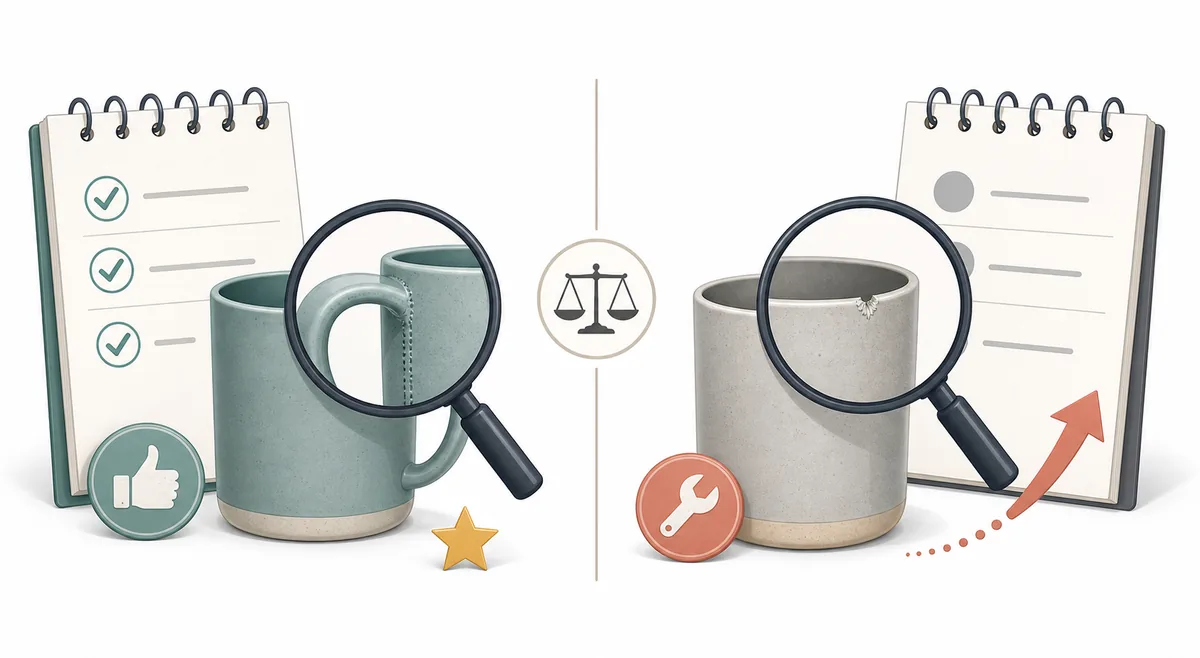
A negative review can be useful when it explains a real problem without exaggerating it. Start with what you expected, describe what actually happened, and explain the practical impact. If the business had a reasonable chance to fix the problem, say whether you contacted it and what response you received.
Avoid personal attacks, threats, private information and claims about motives you cannot prove. A sentence such as “the order arrived two days late and support did not reply before the event” is more actionable than “this company does not care about customers.” Keep the review focused on the transaction, service or product rather than on an individual’s character.
If the issue was resolved, include that update. A review can explain the original problem and still acknowledge a refund, replacement or later response. This gives readers a more accurate picture and gives the business a clear lesson.
- State the expectation. Mention the advertised timing, feature, condition or service promise only when it is relevant.
- Describe the evidence. Use dates, order status, observable defects, messages or other details you can personally support.
- Explain the impact. Tell readers what the delay, defect or interaction changed for you.
- Invite a fair conclusion. Say what would have improved the experience and whether the issue was resolved.
| Too broad | More useful |
|---|---|
| Terrible company that never helps. | My replacement request received no reply for five business days, so I had to buy the part elsewhere. |
| The product is useless. | The battery lasted about two hours in my test, below the advertised range and too short for my commute. |
| The hotel was a disaster. | The room was clean, but construction noise started before 7 a.m. and the front desk could not offer a quieter room. |
| The staff were rude. | The representative interrupted twice and closed the ticket before answering the compatibility question. |
Short and Detailed Review Templates
Choose the shortest format that still gives enough context. A template should make your own facts clearer, not make every review sound identical.
One-sentence review
I used [product or service] for [context], and [specific detail] made the experience [outcome], so it is a good fit for [audience].
Use this when the experience is simple and one detail is enough.
Three-sentence review
I chose [business, product or service] for [context]. [Specific detail] stood out because [result or limitation]. I would recommend it to [audience], especially if [condition].
This is a practical default for most customer reviews.
Balanced product review
After [time period] of using [product] for [use case], I liked [strength] and noticed [limitation]. It works best for [audience], but buyers who need [different need] should compare alternatives.
A trade-off often makes a product review more credible.
Constructive service review
The team handled [part that worked] well. The main issue was [specific problem], which affected [impact]. A clearer update or [reasonable improvement] would have made the experience better.
Keep criticism focused on behavior, process and outcome.
Platform Rules and AI Boundaries
The exact posting rules vary by platform, but the safest general principle is the same: write about a genuine experience, avoid incentives or review manipulation, and do not publish private or identifying information about someone else. A platform may remove content that is fake, abusive, promotional or unrelated to the place or product.
AI can help you organize notes, shorten a draft or offer a clearer tone. It cannot verify that the experience happened, and it should not add a purchase, feature, conversation or result you did not provide. Read every sentence before posting and edit the result until it sounds like your own account.
For a neutral request that helps a real customer reach a review page, see the site’s review request email templates. For wording help based on real notes, the AI Review Generator can provide a starting draft, but the final facts and rating remain yours.
- Use first-hand details and disclose uncertainty instead of guessing.
- Do not exchange money, gifts or discounts for a particular rating.
- Do not review a business, product or employee when you have a conflict that makes the review misleading.
- Remove names, phone numbers, order details and other private information that does not need to be public.
- Check the platform’s current content policy when the review involves regulated, safety-sensitive or disputed claims.
How to Write a Review: FAQ
How do I write a good review for food?
Mention what you ordered, one specific detail about taste, preparation, service or atmosphere, and the result for your visit. A short example is: “The soup arrived hot, the staff handled our allergy question clearly, and the quiet tables worked well for a quick lunch.”
How long should a customer review be?
There is no universal ideal length. Two or three specific sentences are enough for a simple experience; a complex product, hotel stay or service problem may need a short paragraph with a limitation and conclusion.
How do I write a negative review without sounding rude?
Describe the expectation, observable problem and practical impact. Avoid insults and claims about motives. If the business responded or fixed the issue, include that update so the review remains fair.
Can AI write a review for me?
AI can help organize genuine notes or improve clarity, but it should not invent an experience, rating, purchase, conversation or product result. Review the draft line by line and keep only facts you can personally support.
What is the difference between writing a review and leaving a review?
Writing is the process of organizing your experience and wording. Leaving or posting a review is the platform action that sends it to Google, a store, a booking site or another service. This guide focuses on the writing part; platform-specific posting steps belong on the relevant help page.
Final Review-Writing Checklist
Before you publish, confirm that the review says what happened, includes at least one concrete detail, explains the result and gives a proportionate recommendation. Remove generic filler, unsupported accusations and anything that came from a template but not from your experience.
The best review is not necessarily the most positive or the longest. It is the clearest account of a real experience for a reader who needs to make a decision. Use the four-part formula as a guide, then keep the final wording natural and honest.