Choosing a tool10 min
Best AI Review Generator: How to Choose the Right Tool
Compare review-writing tools by input fidelity, platform fit, editing control, privacy, and the kind of draft you need.
Read the guideA growing library of clear review-writing advice, platform-specific examples, business response guidance, and responsible AI workflows.
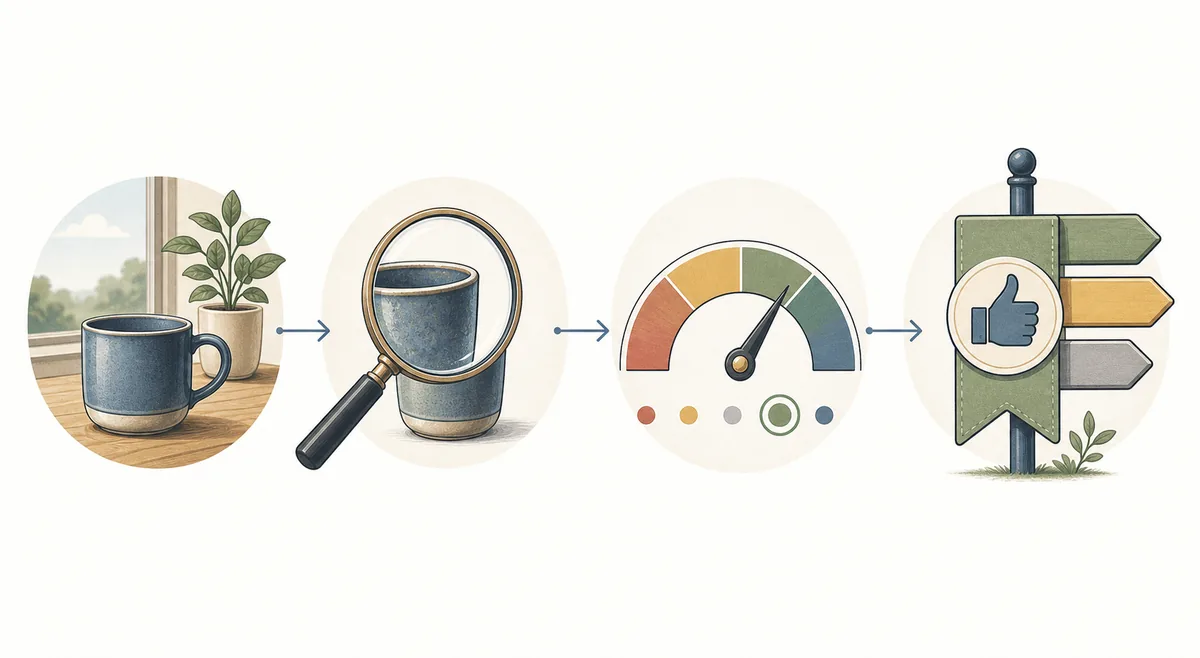
Welcome to the AI review blog, a practical starting point for people who want to write clearer customer, product, restaurant, hotel, workplace, or business-response copy. The AI review blog is organized around the job you need to finish, so the fastest way to find a useful article is to name that job first: are you describing a real experience, answering a customer, comparing tools, or looking for examples that show the right level of detail?
Every guide here treats AI as a writing assistant. You provide the experience, facts, limits, and audience; the tool or template helps organize those inputs into a draft. That distinction protects accuracy and keeps the final wording connected to a person who can support what it says.
Use the topic groups below to move from a general question to a focused guide. Each page has its own search intent, examples, and next step, so this AI review blog lets you read only the section that matches your situation instead of forcing one generic review template to fit everything.
Compare review-writing tools by input fidelity, platform fit, editing control, privacy, and the kind of draft you need.
Read the guideUse real visit details, a natural structure, and a careful editing pass to create a useful Google review draft.
Read the guideLearn a calm response pattern for appreciation, questions, mixed feedback, and a private follow-up.
Read the guideA practical workflow for acknowledging a concern, avoiding defensiveness, and keeping private details out of public replies.
Read the guideOrganize features, use conditions, strengths, tradeoffs, and a clear recommendation without making unsupported claims.
Read the guideSee how specific evidence, balanced language, and a next step make performance feedback more useful.
Read the guideUse concrete details and measured praise to write positive feedback that helps the next reader.
Read the guideA simple structure for context, specific detail, overall judgement, and a useful closing line.
Read the guideCover food, service, atmosphere, value, and who the restaurant may suit without repeating empty adjectives.
Read the guideFind fair wording for cleanliness, communication, house rules, location, and the details future guests need.
Read the guideInvite honest feedback with concise, respectful email wording that gives customers room to write in their own voice.
Read the guideStart here when the challenge is turning scattered notes into a readable review. The basic structure is simple: explain the context, add one or two specific observations, give a balanced overall view, and close with who may find the experience useful. This works for a service, a restaurant, a product, or a stay because it follows the reader's natural questions.
The best examples are not the most dramatic. They show what happened and why that detail matters. A short note about wait time, setup, support, fit, or cleanliness usually helps more than a string of generic words such as amazing, perfect, or terrible.
Platform context changes what a useful review should include. A Google review often benefits from a concrete service or location detail. A restaurant review should separate food, service, atmosphere, and value. An Airbnb review should help future guests understand communication, cleanliness, house rules, and the practical location.
The platform also changes the responsible-use boundary. Keep the review connected to a real visit or purchase, avoid exposing private information, and check the platform's current contribution rules when a situation is disputed or sensitive.
A business reply is a different writing job from a customer review. It should acknowledge the person, answer what can be answered publicly, and offer one realistic next step. Avoid arguing about private records, repeating sensitive details, or promising an action the team cannot complete.
For negative feedback, a short and respectful reply is often stronger than a defensive explanation. The goal is not to win a public debate. It is to show that the concern was heard and that a private route exists for checking the facts.
Product and performance reviews need evidence that matches the decision a reader is making. Product readers want to know how an item was used, what worked, what did not, and who it may suit. A manager or employee needs observable work, outcomes, context, and a constructive next step rather than vague praise.
Use the examples as a checklist, not as text to copy. Replace every generic claim with your own observation and remove any sentence that sounds more certain than the evidence. That small editing habit keeps the review useful and protects the people described in it.

Begin with the destination and the person who will read the text. A short local review needs a concrete detail and a balanced summary. A product review needs use conditions, strengths, tradeoffs, and who the product suits. A response from a business needs acknowledgement, privacy care, and a realistic next step.
Then decide whether you need explanation or production help. An example page is useful when you want to compare tone and structure. A how-to guide is better when you are still collecting facts or deciding what to include. A generator page is useful after you know the experience and want a first draft that remains easy to edit.
Finally, read the limitations before you publish. The articles explain how to remove private details, check every generated claim, avoid fake identities, and follow the rules of the platform where the review will appear. A polished sentence is only useful when it remains true.
AI can make a rough review easier to read, but it cannot turn an unverified opinion into evidence. The safest workflow starts with a real experience and keeps a person accountable for the final text. This is especially important for public reviews, workplace feedback, and business replies that may affect someone else's decision.
Use specific observations rather than inflated praise. Mention the service you received, the feature you used, the meal you ordered, the problem you encountered, or the outcome you can actually describe. If a detail is uncertain, leave it out or label it as an impression rather than presenting it as a fact.
Privacy belongs in the editing pass. Remove order numbers, phone numbers, private addresses, health information, and customer names that do not need to be public. For disputes or sensitive cases, use the platform's private support route instead of placing personal records in a review.
The AI review blog is a topic hub for practical review-writing guides, examples, platform advice, business response workflows, and responsible ways to use AI around real experiences.
Choose the page that matches the job. Start with the general review structure for a broad question, the Google guide for a local visit, the product guide for a purchase, or the response guides for a business reply.
Use examples to understand structure and tone, then replace the details with your own experience. Never publish a sentence that describes a visit, purchase, result, or person you cannot support.
AI can help organize a genuine experience, but a person should verify every claim, remove private information, and follow the current platform rules before publishing.
Use the AI review generator after collecting the facts. A specific Google, product, performance, or response page can be a better fit when the audience and format are known.
Open the free AI review generator when you have a real experience ready to describe. Start with a few facts, choose a tone, and edit the result before sharing it.
Open the AI review generator